Marylebone Commercial Cleaning: Health & Safety Rules
If you manage an office, retail unit, managed building, or shared workspace in Marylebone, health and safety is not just a box-ticking exercise. It affects the way cleaning is planned, the products used, the timing of the work, and how people move through the building while the job is happening. Marylebone Commercial Cleaning: Health & Safety Rules is really about keeping staff, visitors, cleaners, and assets safe without turning the place upside down.
That sounds straightforward, but in real life there are plenty of moving parts. Wet floors, cables, chemical storage, fragile surfaces, sharp waste, after-hours access, and the odd emergency spill all need thought. The good news? With the right routine, commercial cleaning can be safe, efficient, and pretty seamless. In this guide, we'll break down what matters, how the process works, and what to expect if you want cleaning that feels organised rather than chaotic.
Table of Contents
- Why Marylebone Commercial Cleaning: Health & Safety Rules Matters
- How Marylebone Commercial Cleaning: Health & Safety Rules Works
- Key Benefits and Practical Advantages
- Who This Is For and When It Makes Sense
- Step-by-Step Guidance
- Expert Tips for Better Results
- Common Mistakes to Avoid
- Tools, Resources and Recommendations
- Law, Compliance, Standards, or Best Practice
- Options, Methods, or Comparison Table
- Case Study or Real-World Example
- Practical Checklist
- Conclusion
- Frequently Asked Questions
Why Marylebone Commercial Cleaning: Health & Safety Rules Matters
Commercial premises in Marylebone tend to be busy, shared, and often tight on time. One area is being mopped while another team is still working. A lift lobby needs cleaning before clients arrive. A stairwell gets used constantly. That kind of environment leaves very little room for guesswork.
Health and safety rules matter because cleaning itself can create risk. A surface that is safe when dry can become slippery in seconds. A strong detergent can damage a floor finish or irritate skin. A vacuum lead across a corridor can become a trip hazard. None of this is dramatic on its own, but together it can cause avoidable disruption or injury. Truth be told, most cleaning problems start with small lapses, not big disasters.
For businesses, the stakes are practical as well as legal. A poor cleaning routine can lead to complaints, downtime, damaged equipment, and unhappy tenants or staff. A sensible one helps protect the building, support hygiene standards, and keep operations moving. If you want to understand how a professional provider approaches that side of the job, the health and safety policy and insurance and safety information are good places to start.
Expert summary: In commercial cleaning, safety is not an extra layer added at the end. It should shape the whole job from the first site walk-through to the final sign-off.
And yes, the paperwork matters too. Not in a thrilling way, obviously, but in the real world it's what keeps jobs consistent when different cleaners, different shifts, and different site conditions come into play.
How Marylebone Commercial Cleaning: Health & Safety Rules Works
A safe commercial cleaning process usually begins before anyone picks up a mop. The cleaner or cleaning company should understand the site, the surfaces, the access points, the occupancy pattern, and any special risks such as fragile flooring, allergy concerns, or restricted areas. That initial awareness changes everything.
In practical terms, the process often looks like this:
- Site review and risk check. The team looks at what needs cleaning, what could go wrong, and which areas need extra control.
- Task planning. Jobs are scheduled around staff movement, opening hours, deliveries, or quiet periods.
- Product selection. The right chemical, dilution, and application method are chosen for the surface and the task.
- Equipment preparation. Tools are checked so they are clean, working, and suitable for the space.
- Work area control. Signs, barriers, and access restrictions are used where needed.
- Cleaning and monitoring. The work is carried out with attention to slips, spills, ventilation, and contact time.
- Post-clean checks. Surfaces are left safe, dry where possible, and ready for normal use.
That may sound neat on paper. In reality, it can be a bit more stop-start. A cleaner notices a loose cable under a desk. Someone walks through a corridor that should be paused for drying. A spill turns up near reception at the worst possible moment. The important thing is having a process that can handle those little interruptions without creating a bigger problem.
If you're using a broader service mix, such as office cleaning, deep cleaning, or a periodic one-off cleaning visit, the safety rules should adjust to the job rather than stay fixed and rigid. A deep clean of a conference suite is not the same as a quick evening tidy of communal areas. Different risks, different controls.
Key Benefits and Practical Advantages
When health and safety rules are done properly, the advantages go beyond "no accidents", although that part is obviously important. The best systems make commercial cleaning calmer, more predictable, and easier to manage.
- Fewer slips and trips: especially in entrances, kitchens, toilets, and high-traffic corridors.
- Better hygiene control: fewer cross-contamination issues between touchpoints, washrooms, and shared surfaces.
- Less disruption: work can be planned around staff, clients, and visitors so the place still functions.
- Longer surface life: correct products and methods help protect floors, carpets, furniture, and fixtures.
- Clearer accountability: everyone knows what has been cleaned, what is pending, and what needs reporting.
- More confidence for building managers: a tidy process usually means fewer awkward surprises.
There's also a quieter benefit that people underestimate. A safe, well-run cleaning routine simply feels better. Staff notice when a workspace smells fresh without smelling harsh, when floors are dry on time, when bins are handled properly, and when the whole place seems cared for rather than merely "done." It changes the tone of a building, a bit more than you might expect.
For premises with specialist surfaces, the benefit is even more obvious. A hard floor that is over-wet can become hazy or slippery. Carpets can suffer if the wrong method is used. Upholstery can hold too much moisture if handled carelessly. Services such as hard floor cleaning, carpet cleaning, and upholstery cleaning need exactly this kind of careful approach.
Who This Is For and When It Makes Sense
This topic matters to anyone responsible for a commercial space in Marylebone, but especially to people who juggle access, occupancy, and presentation all at once. If that sounds familiar, you're in the right place.
- Office managers who need cleaning around working hours, hot-desking, and meeting schedules.
- Landlords and property managers looking after shared entrances, stairwells, and communal areas.
- Retail or hospitality operators where cleanliness and public safety are visible every hour of the day.
- Facilities teams coordinating contractors and keeping risk controls tidy.
- Business owners who want outsourced cleaning without losing sight of safety duties.
It also makes sense when the site is awkward. A narrow back corridor, a busy foyer, old flooring, a kitchen that's used all day, or a building with mixed occupiers can all benefit from a more structured cleaning plan. If you've ever thought, "This place needs a clean, but not the kind that gets everyone annoyed," then yes, this is the subject for you.
In residential-adjacent or mixed-use buildings, the same approach helps too. Services like domestic cleaning and house cleaning follow a different rhythm, but the safety mindset is very similar: know the space, avoid hazards, and keep people informed.
Step-by-Step Guidance
If you're setting up or reviewing a commercial cleaning arrangement, use this sequence as a practical starting point. It keeps the process grounded and avoids the common "we'll just wing it" approach, which, let's face it, rarely ages well.
1. Identify the risk areas
Walk the site and mark the obvious hazards: wet entrances, loose mats, cables, narrow stairways, hot equipment, chemicals already stored on site, and any areas that must not be entered. You do not need a full lecture from a clipboard to see what's risky. Common sense goes a long way, although it helps when common sense is written down.
2. Match the cleaning method to the surface
Different surfaces need different handling. Carpet, stone, tile, sealed wood, glass, and fabric all behave differently. A solution that works fine on one surface may be too strong, too wet, or too abrasive on another. If the job includes a combination of surfaces, such as in a reception area or serviced office, method selection matters even more.
3. Set access rules before work begins
Think about who can enter, when, and how. A "cleaning in progress" sign helps, but it is not a magic shield. In busier buildings you may need temporary barriers, partial closures, or a phased cleaning pattern. The main thing is to prevent people from wandering onto wet or restricted areas in the first place.
4. Brief the cleaning team properly
Instructions should be simple and specific. Which rooms are priorities? Which products should be used? Which surfaces need extra care? Where is the waste stored? Where is the nearest sink? A good briefing saves time later. It also prevents those awkward "oh, I didn't know that" moments when someone has already started work.
5. Clean, monitor, and adapt
Safety is not a one-time check. During the job, the team should watch for spills, uneven drying, obstructions, and changes in foot traffic. If something changes, the cleaning plan should change too. That may mean pausing a route, reopening later, or returning after the area clears.
6. Finish with a proper handover
The job is not really finished until the area is safe to use again. That includes checking the floor, removing waste, clearing equipment, and confirming that any restrictions have been lifted. A neat handover builds trust. A sloppy one leaves people guessing, and nobody likes that at 8:45 on a Monday morning.
Expert Tips for Better Results
These are the small, sensible habits that often make the biggest difference. Not glamorous. Very useful.
- Use less product than you think. Overuse often creates residue, smell, or slip risk.
- Ventilate where possible. Especially in washrooms, kitchens, and small meeting rooms.
- Keep cleaning routes consistent. People learn the pattern and are less likely to cross into active areas.
- Label things clearly. Bottles, dilution mixes, waste bags, and storage areas should be obvious.
- Check high-touch points twice. Door handles, buttons, switches, and shared desks can be missed when work feels rushed.
- Don't mix tasks carelessly. Cleaning and maintenance are different jobs; combining them without thought can create unnecessary risk.
A small but useful habit: look at the building at the end of the clean as if you are the first visitor arriving in the morning. What do you notice? A faint chemical smell? A damp patch near the lift? A bin that was left half-sealed? That quick mental review catches more than people expect.
If you need a provider for more specialised work, it helps to ask how they handle specific environments such as window cleaning, oven cleaning, or carpet cleaning support in a commercial setting. Specialist tasks often carry their own little safety quirks.
Common Mistakes to Avoid
Most cleaning-related safety issues are not especially mysterious. They are usually the result of rushing, poor communication, or overconfidence. A classic trio.
- Starting without a risk check. Even a quick review can prevent a bad day.
- Using the wrong chemical strength. More is not better. It rarely is.
- Leaving wet floors unmarked. This one really should be obvious, but it still happens.
- Blocking fire routes or doors. Never acceptable, even for a short stretch.
- Ignoring storage rules. Chemicals, cloths, sharps, and waste all need sensible separation.
- Assuming all staff know the plan. In reality, they probably don't. Tell them.
A more subtle mistake is treating all cleaning jobs as the same. A quick office tidy, a post-refurbishment clean, and a full move-out clean have very different risk profiles. For example, after builders cleaning often needs extra care around dust, debris, hidden damage, and fragile surfaces. That sort of job can look simple from the doorway and then become quite the little beast once you step inside.
Another easy mistake? Forgetting the human side. People get distracted, people are in a hurry, people leave coffee cups in strange places. Safety systems should account for that, not pretend everyone behaves perfectly.
Tools, Resources and Recommendations
The right tools make safe cleaning easier. The wrong ones make it harder and usually more annoying. Here's what tends to matter most in commercial settings.
| Tool or resource | Why it helps | Best used for |
|---|---|---|
| Wet floor signs and barriers | Reduce slips and stop accidental access | Entrances, corridors, toilets, shared spaces |
| Colour-coded cloths and mops | Helps avoid cross-contamination between areas | Washrooms, kitchens, desks, touchpoints |
| Clearly labelled chemicals | Makes handling and storage safer | General cleaning, specialist tasks, dilution control |
| Microfibre systems | Often reduce excess moisture and improve pickup | Routine commercial cleans, touchpoint cleaning |
| Inspection checklist | Keeps standards consistent from visit to visit | Handover, audits, recurring cleaning |
One recommendation that often gets overlooked: choose a cleaning partner who is willing to explain what they are doing. If they can talk clearly about risk controls, product use, and escalation steps, that's usually a very good sign. If they can't explain the basics in plain English, be careful.
You may also want to look at practical company information such as about us for background and pricing and quotes when you're comparing options. Not because price is everything. It isn't. But budget and process should make sense together, otherwise the whole arrangement feels a bit wobbly.
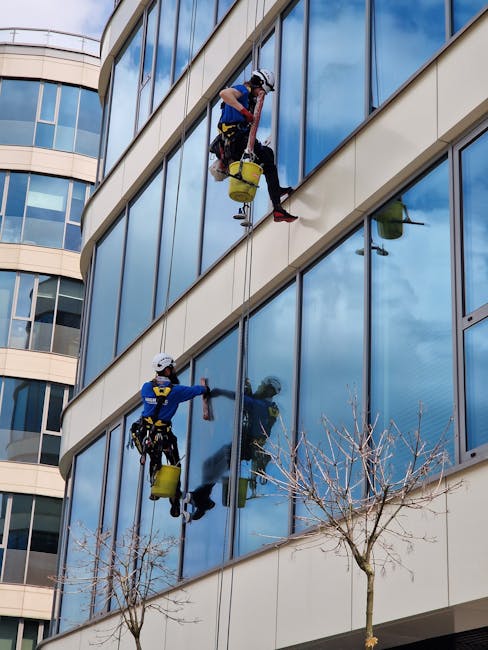
For commercial premises that need specialist care from time to time, services like facade cleaning, rug cleaning, and sofa cleaning can require extra controls and the right equipment. It's not just "clean harder." It's "clean smarter."
Law, Compliance, Standards, or Best Practice
Commercial cleaning in the UK sits within a wider framework of workplace health and safety duties, general risk management, and sensible operational practice. The exact obligations depend on the site, the work being done, and who controls the premises, so it is wise to treat compliance as a working process rather than a one-off checkbox.
At a practical level, this usually means:
- identifying foreseeable risks before work starts
- using equipment and chemicals properly
- protecting people who may enter the area during or after cleaning
- keeping records where they help demonstrate control and consistency
- making sure staff are trained for the tasks they are given
Best practice also means being honest about limits. A reputable cleaning company should be able to say when a task needs more time, more access control, specialist equipment, or a different method altogether. That honesty is part of safety. It's also part of good service.
If you are reviewing supplier standards, it may help to check related policies such as the terms and conditions and privacy policy so you know how site information, access details, and customer data are handled. For some clients, that is as important as the clean itself, especially in offices where many people pass through reception and shared workspaces.
And while the legal side matters, the everyday standard is simpler: does the building feel safe, tidy, and ready for normal use? If the answer is yes, the system is usually doing its job.
Options, Methods, or Comparison Table
Not every commercial cleaning arrangement should be handled the same way. The safest choice depends on the setting, the amount of foot traffic, and how sensitive the surfaces are.
| Method | Best for | Safety strengths | Things to watch |
|---|---|---|---|
| Routine cleaning | Daily offices, reception areas, shared facilities | Low disruption, predictable workflow | Can miss deeper issues if inspections are too light |
| Deep cleaning | Periodic refreshes, neglected areas, seasonal resets | Better for hidden dirt and build-up | Needs clearer access control and time planning |
| Specialist cleaning | Floors, carpets, windows, upholstery, ovens | Targets specific risks and materials | Requires correct tools and trained handling |
| One-off cleaning | Events, move-ins, clear-outs, urgent refreshes | Flexible and fast to arrange | Easy to under-scope if the site is more complex than expected |
For many Marylebone businesses, a mixed approach works best. Routine cleaning keeps the place stable, while periodic specialist work tackles the heavier tasks. That might mean regular office maintenance with occasional office cleaners, plus targeted services for floors or fabrics when needed. A site that gets a little of both usually stays safer and looks better. Simple enough, really.
Case Study or Real-World Example
Imagine a small consultancy office near Marylebone High Street. It has a compact reception, a couple of meeting rooms, an open-plan desk area, and a kitchenette that everyone uses. Nothing unusual. But the rhythm of the building creates risks that are easy to overlook.
In the morning, staff arrive early with laptops and coffee. At lunch, people drift in and out of meetings. By evening, the cleaner needs to work quickly without blocking access to the kitchenette or leaving damp patches near the entrance. A rushed clean would create slips, missed bins, and probably a bit of grumbling the next day. Nobody needs that.
A better approach would look like this: the cleaner starts with the quieter rooms, uses clear signs in the corridor, keeps cables out of walkways, and leaves the entrance until last so it stays dry as long as possible. The kitchenette gets a separate cloth and a separate sequence. Touchpoints get a final wipe. Small change, big difference.
That sort of routine is exactly where the health and safety rules earn their keep. Nothing flashy. Just a building that works properly and people who don't have to tiptoe around it.
When a business wants a broader refresh, the same careful approach can support services like end of tenancy cleaning or cleaning company support, where timing, access, and handover standards matter even more than usual.
Practical Checklist
Use this checklist before, during, or after a commercial cleaning visit. It is simple on purpose.
- Have the main hazards been identified?
- Are the right products and methods being used for each surface?
- Are wet floors, restricted areas, and trip hazards clearly controlled?
- Do staff and cleaners know which rooms are in use?
- Are chemicals stored, labelled, and handled properly?
- Have high-touch points and shared spaces been included?
- Are waste, sharps, and awkward materials being separated appropriately?
- Has the area been checked after cleaning for dryness and safe access?
- Are any issues reported and recorded promptly?
- Does the cleaning plan need adjusting for the next visit?
Quick reminder: if a site ever feels "almost safe," it probably needs one more check. That extra minute is often worth it.
Get a free quote today and see how much you can save.
Conclusion
Marylebone commercial cleaning works best when safety is built into the routine from the start. Not as a scary compliance burden. Not as a dusty folder nobody opens. Just as part of a sensible, professional way of looking after a building.
When the rules are clear, the risks are easier to manage, the cleaning is more consistent, and everyone using the space feels more at ease. That matters in busy Marylebone premises where time is tight, foot traffic never quite stops, and the standard needs to stay high.
If you remember only one thing, make it this: good cleaning should leave a place cleaner and calmer. A safe environment does both. And that, in the end, is the real win.
Frequently Asked Questions
What are the main health and safety rules for commercial cleaning?
The main rules are to identify hazards, choose the right cleaning method, control access to wet or restricted areas, handle chemicals properly, and make sure the space is safe to use after the clean.
Why is commercial cleaning riskier than domestic cleaning?
Commercial spaces usually have more foot traffic, more shared surfaces, more cables or equipment, and tighter timing. That means more chances for slips, interruptions, and accidental contact with wet or restricted areas.
Do I need a risk assessment for office cleaning?
In practice, yes, some form of risk review is a sensible and common part of commercial cleaning. The detail depends on the site, but the cleaning team should know what could go wrong and how to control it.
How do cleaners prevent slips and trips?
They use wet floor signs, barriers, careful timing, controlled routes, and the right amount of moisture for the surface. Good planning matters as much as the mop itself.
What should a cleaning company do before starting work?
They should review the site, confirm access, identify hazards, choose suitable products and tools, and explain the cleaning plan clearly. A proper briefing saves a lot of hassle later.
Are special products always safer than standard products?
Not necessarily. The safest product is the one that matches the task and is used correctly. Stronger is not automatically better. In fact, that can be a mistake.
How often should a commercial space be deep cleaned?
That depends on use, occupancy, and the type of business. Busy offices, shared spaces, or places with kitchens and washrooms may need deeper cleans more often than low-traffic premises.
What should I check in a cleaning provider's safety policy?
Look for clear handling of risk assessment, chemical use, equipment checks, incident reporting, and safe work practices. If the policy is vague, that is usually a warning sign.
Can commercial cleaning happen during business hours?
Yes, but only if access, noise, drying time, and safe movement around the site are properly managed. Sometimes early mornings or evenings work better, depending on the building.
What if a cleaner finds a hazard during the job?
They should stop, make the area safe if possible, and report the issue immediately. That might mean blocking access, changing the task order, or escalating to the site manager.
How do I know if my current cleaning setup is safe enough?
Ask whether the process is clear, consistent, and easy to follow. If people are still unsure about wet floors, chemicals, access routes, or who is responsible for what, there is room to improve.
What is the most common mistake in commercial cleaning safety?
Probably assuming that everyone already knows the plan. In busy buildings, people miss messages all the time. Clear instructions and visible controls prevent most avoidable problems.
If you want to go a step further, reviewing your cleaning setup alongside recycling and sustainability can help reduce waste and keep operations tidy too. And if you are just getting started, contact us is the natural next step for practical guidance. Safe cleaning is not glamorous, but it does make the whole place feel better. That counts for a lot.